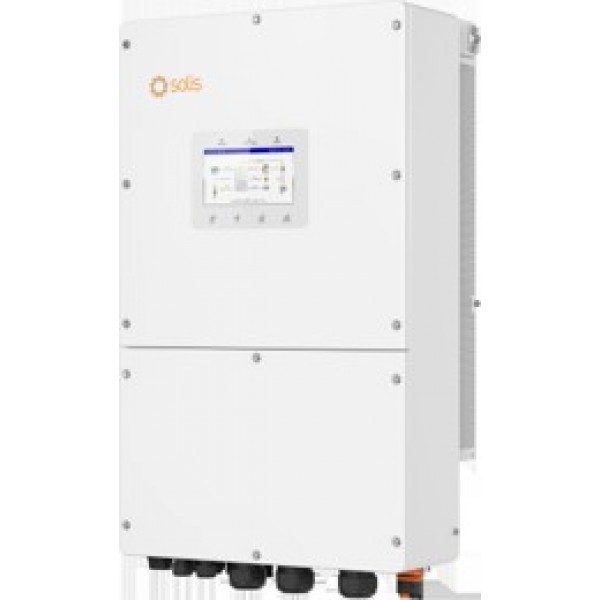
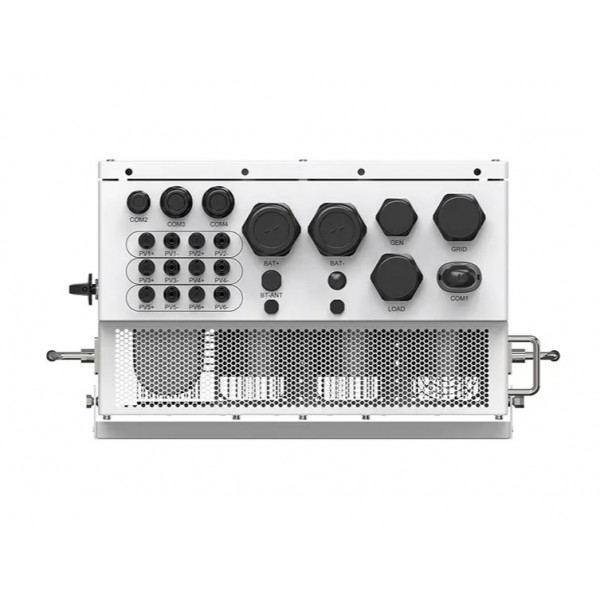
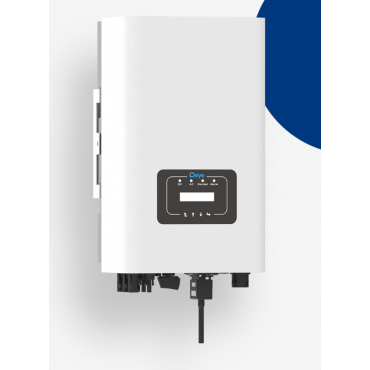
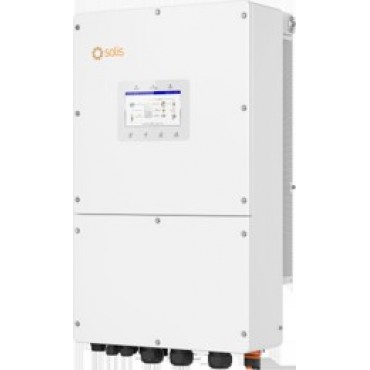
The Solis S6-EH3P50K-H is a 50kW three-phase high-voltage hybrid energy storage inverter with four MPPT trackers, 97.8% maximum efficiency, and a 5-year warranty. It accepts up to 96kW of usable PV input, runs a high-voltage lithium battery bank at 150-800V, and handles 70A × 2 charge/discharge.
96kW of PV input on a 50kW inverter nearly double the nameplate. This is the most striking specification on the sheet. A 2:1 DC-to-AC ratio at commercial scale means you can build an array almost twice the inverter's rating: panels rarely produce their rated output in real conditions, so a 96kW array on this 50kW unit generates through far more of the day and captures substantially more in early morning, late afternoon, and under cloud. For a commercial or industrial site with large roof area, this changes the equipment maths one inverter handling a 96kW array instead of two units, with the cabling, protection, and installation cost that a second inverter brings.
High voltage battery architecture why it is essential at this scale. Smaller hybrids run 40-60V battery banks, which works up to about 15kW. Above that, low-voltage systems hit a physical wall: pushing 50kW through a 48V bank means enormous current, very heavy cabling, and real resistive losses. This unit runs a high-voltage bank at 150-800V, so the same power moves at a fraction of the current thinner cabling, lower losses, faster charging, and a system that stays efficient at industrial scale. For commercial energy storage, HV is not a premium option; it is the only architecture that works properly.
What a hybrid does that a grid-tied inverter cannot. An on-grid inverter exports your surplus and then goes dead the moment the grid fails. This hybrid routes power three ways to your load, to your battery bank, and to the grid so when supply drops, your site keeps running. At 50kW, serving a factory, a hospital, a hotel, a data facility, or a large commercial building, that continuity is the whole justification: production or service that stops during an outage costs far more than the storage does.
Four MPPT trackers. Each handles 40A operating current (60A short-circuit) across a 150-850V range sized for a large industrial array spanning multiple orientations and shading conditions, so each section generates at its own maximum instead of being averaged down to the weakest string. On a 96kW array spread across a large roof, that tracker count is a direct lever on delivered yield.
Lithium only. At high voltage and commercial capacity, lithium's cycle life, charge rate, and battery management are what the architecture requires lead-acid does not work in this configuration. Budget accordingly: it is the higher upfront cost but the only sensible chemistry at this scale, and it lasts far longer under the daily cycling a commercial storage system sees.
Monitoring and installation. CAN, RS485, and Ethernet with optional Wi-Fi, cellular, or LAN full remote monitoring for a commercial asset. At 73kg in a 530 × 880 × 290mm cabinet, mounting must be planned and properly rated as part of the installation design.
Sizing the system. A 50kW inverter suits an array up to 96kW. The battery bank is the larger decision and the larger cost undersized it dies mid-outage, oversized it is capital sitting idle. Tell our team which circuits must stay live, at what load, and for how long, and we will size the bank against your actual requirement.
SolarClue is India's managed solar marketplace. For a commercial storage system this size, we handle the design as a project rather than a product sale our team confirms the inverter matches your array, your three-phase supply, your battery requirement and your DISCOM's rules, then coordinates specification, supply and installation through verified EPC partners. You work with token-payment protection rather than full advance, and we handle Solis warranty support through the asset life. Talk to our team for a specification review, current pricing, and installation timeline.